
01
What tint percentage is legal in Florida?
For ordinary aftermarket film without an applicable exemption, Florida sets different limits for front side windows and windows behind the driver. The front side windows must transmit at least 28% of visible light; the usual minimum behind the driver is 15%, or 6% for multipurpose passenger vehicles. Reflectivity also has limits. These figures describe the material applied to and tested on the vehicle’s glass, not simply a number on a film box.
This guide summarizes the 2026 statutes reviewed on November 23, 2026. Confirm the current rules and your vehicle’s classification with the installer before work. It is general information, not a determination that a particular installation complies.
02
Start with a window-by-window specification
The table covers ordinary film on the side and rear windows. It does not cover every specialty material or exemption. Do not apply the rear-window allowance to the glass beside the driver, or assume every vehicle marketed as an SUV qualifies for the same treatment.
| Window position | Minimum visible light transmission | Maximum visible reflectance |
|---|---|---|
| Front side windows beside or ahead of the driver | 28% | 25% |
| Windows behind the driver: ordinary passenger car | 15% | 35% |
| Windows behind the driver: qualifying multipurpose passenger vehicle | 6% | 35% |
03
A film label is not the final glass reading
Visible light transmission describes how much visible light passes through. A lower number means less visible light passes through the measured combination. Florida’s front-window rule specifically calls for testing the material on the glass of the particular vehicle. Existing glazing matters; a nominal film shade alone is not a compliance measurement.
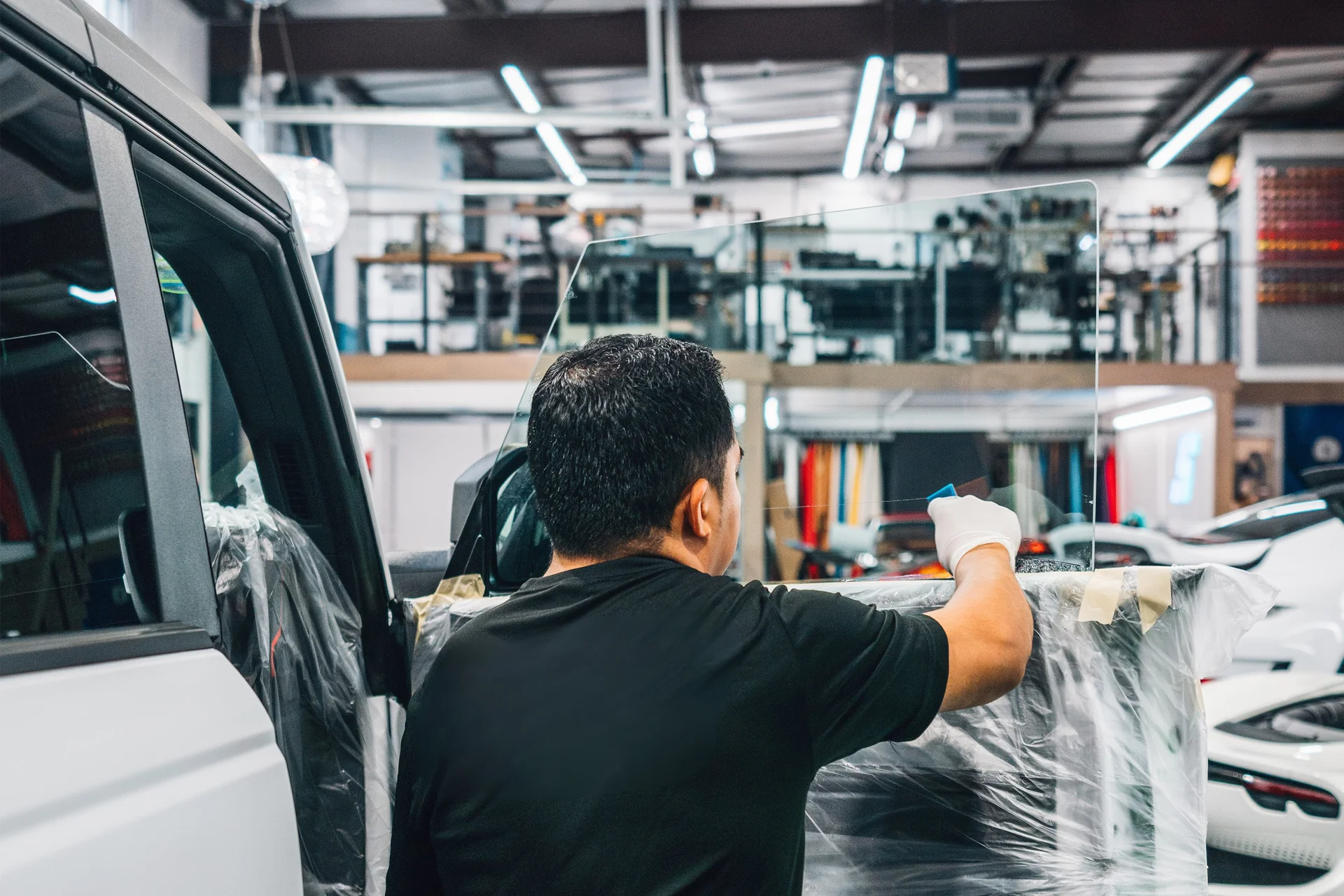
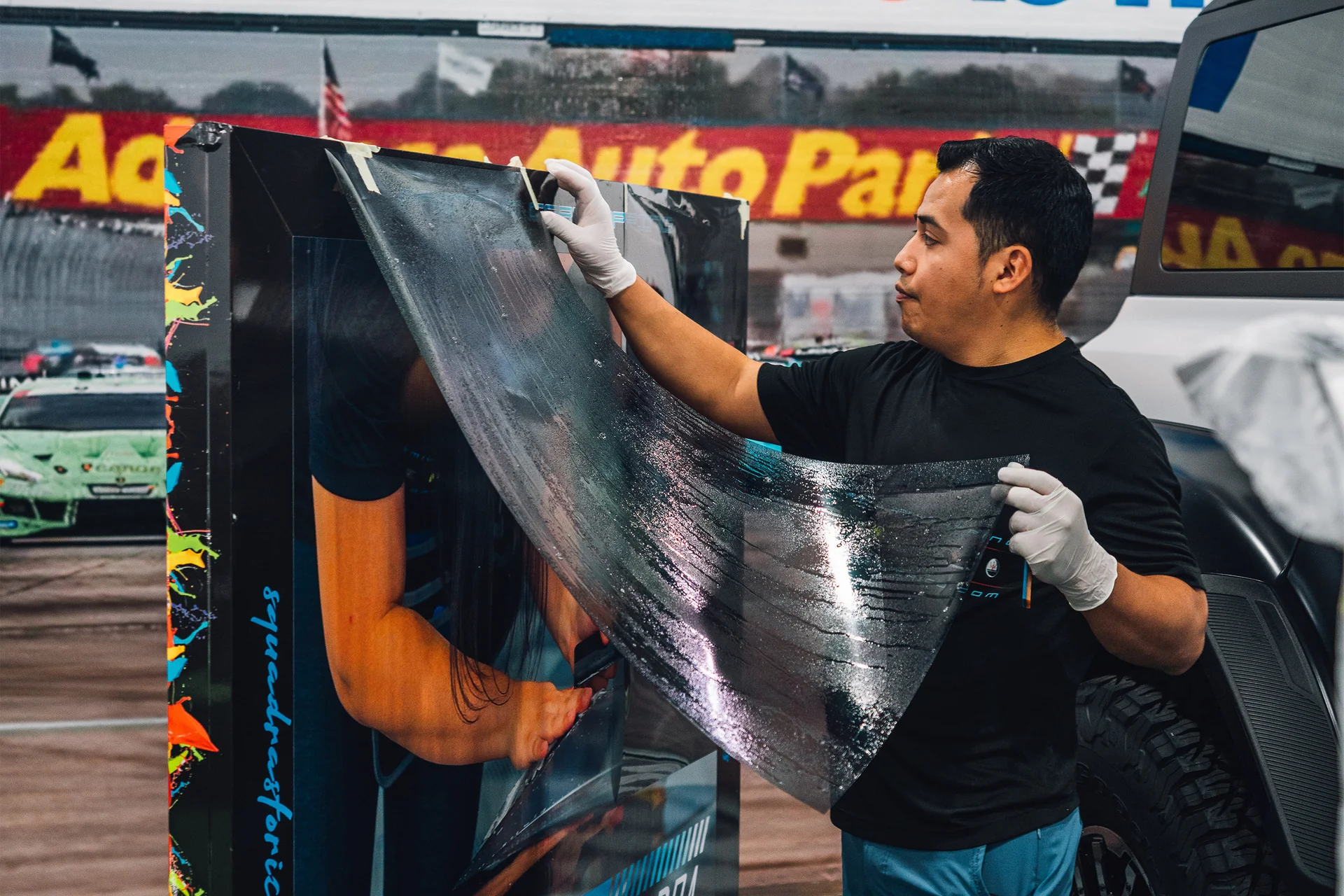
Before accepting a quote, identify existing film and ask which windows will be measured. Have the installer explain the proposed finished result for each position. A photograph of dark glass cannot establish its transmission or reflectance. The shop photographs here show film-handling work, not a verified tint shade or a measured compliance result.
04
The windshield has a different rule
Florida’s ordinary sunscreening exception for the windshield is a transparent strip at the top, outside the driver’s direct forward viewing area as defined by the AS/1 portion. The side-window percentages are not permission to cover the full windshield. Check the actual permitted area rather than treating a generic strip height as the rule.
If you want to address cabin sun exposure, discuss the permitted window treatment separately from the care of leather, Alcantara and dashboard coverings. Our interior sun-care guide covers those material decisions without promising that film stops all fading.
05
Check the label and any exemption paperwork
Section 316.2955 requires the installer to affix a compliance label inside the left door jamb. It identifies the material’s trade name and the installer or seller. The statute also provides a plus-or-minus 3% measurement tolerance; do not treat that tolerance as a reason to order a darker nominal shade. Confirm the intended compliant result and retain the installation details.
Medical exemptions have a separate certificate process. The certificate identifies the vehicle and becomes invalid when that vehicle is sold or transferred. An old owner’s paperwork is not a transferable approval for your purchase. Ask FLHSMV about an applicable exemption rather than assuming a medical condition automatically authorizes a particular installation.
06
Planning window tint in Naples
Unique Auto Lab offers window tint at its Naples shop. Send the year, make and model, identify existing tint, and list the windows you want treated. Separate the proposed glass coverage, film selection and any removal work in the estimate. Ask for the installed measurements and compliance labeling to be confirmed before choosing the final shade.
Related guides
Sources and further reading
Sources support the specific points cited in this guide. Your car's condition and the proposed work still need to be discussed with the shop.
Florida Statutes 316.2952 ↗Florida Statutes 316.2953 ↗Florida Statutes 316.2954 ↗Florida Statutes 316.2955 ↗Florida Statutes 316.29545 ↗