
01
Will paint correction remove the scratches?
Paint correction can improve suitable fine defects in the existing paint finish. It cannot replace missing paint. On a clear-coated car, polishing works on the clear layer above the color; a scratch through that layer needs a different assessment. Before booking paint correction in Naples, have the marks inspected and agree what improvement is realistic.
3M’s scratch-removal guidance explains the tradeoff: removing a surface defect also removes a thin amount of clear coat. It warns that deep or wide scratches may remain and that cutting through the clear coat requires repainting. A proposal should therefore describe the intended improvement and the defects being left alone, not promise to erase everything.
02
Rough paint and swirl marks are different problems
Start with a clean, dry surface. Meguiar’s distinguishes contamination sitting on top of the paint from defects in the finish. Its FAQ describes clay as a way to remove bonded surface contaminants, while explicitly stating that clay does not remove swirls. A smooth-feeling panel can still show fine scratches around a reflected light.
When you send photographs, include one view of the whole panel and another showing the mark with a light reflected nearby. Tell the shop whether the car has film, a coating, previous paint repairs or a matte finish. A close photograph alone may hide both the extent of the problem and the type of surface being assessed.
03
Match the work to the defect
Use this distinction when discussing the car. It is a way to define an inspection, not a diagnosis from a photograph. Keep any proposed paint repair separate from the polishing estimate so you know which problem each item addresses.
| What you notice | Question for the assessment | Avoid assuming |
|---|---|---|
| Roughness after washing | Is contamination sitting on the surface, and how should it be removed? | That more aggressive polishing is the first step. |
| Fine swirls or light haze | What improvement does a small test area show on this finish? | That every panel needs the same process. |
| A deep scratch or an area of missing paint | Does this need paint repair rather than further correction? | That a coating or extra polishing can replace missing paint. |
| A mix of old repairs and original panels | How will the condition of each panel affect the scope? | That a single package description explains the whole job. |
04
One stage or multiple stages? Ask to see the difference
A stage count describes a process, but it does not tell you the result on your car. Compounding and finishing polish can serve different purposes. 3M’s finishing guidance separates defect removal, scratch refinement, polishing and inspection, and also describes systems that finish without a separate compounding step. The appropriate sequence depends on the application.
Ask whether the shop can demonstrate the proposed approach on a small area and explain the difference you should expect across the car. Compare that area in the same lighting as the surrounding paint. If one deeper mark would require more removal than the shop considers appropriate, keeping that mark may be part of the agreed result.
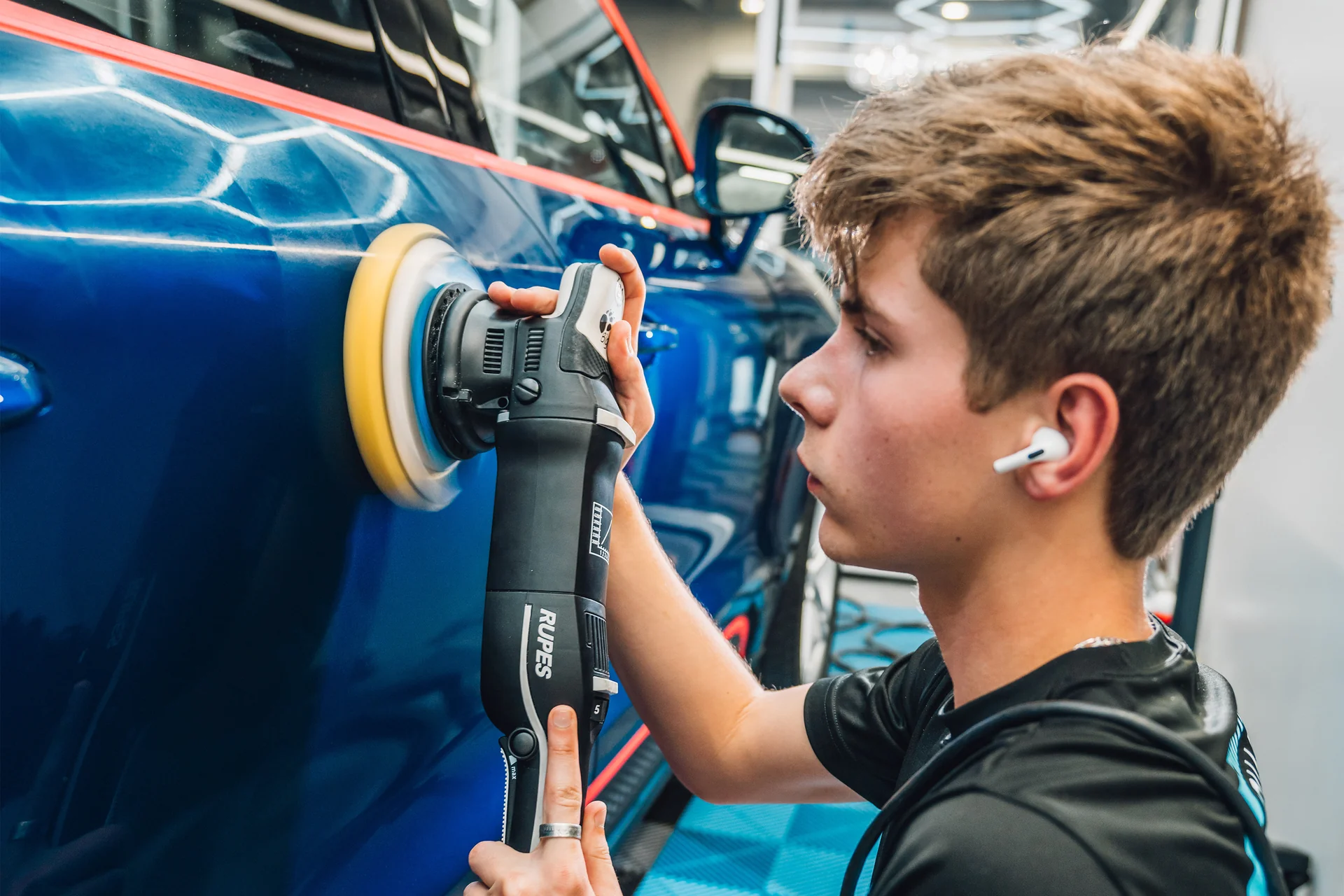
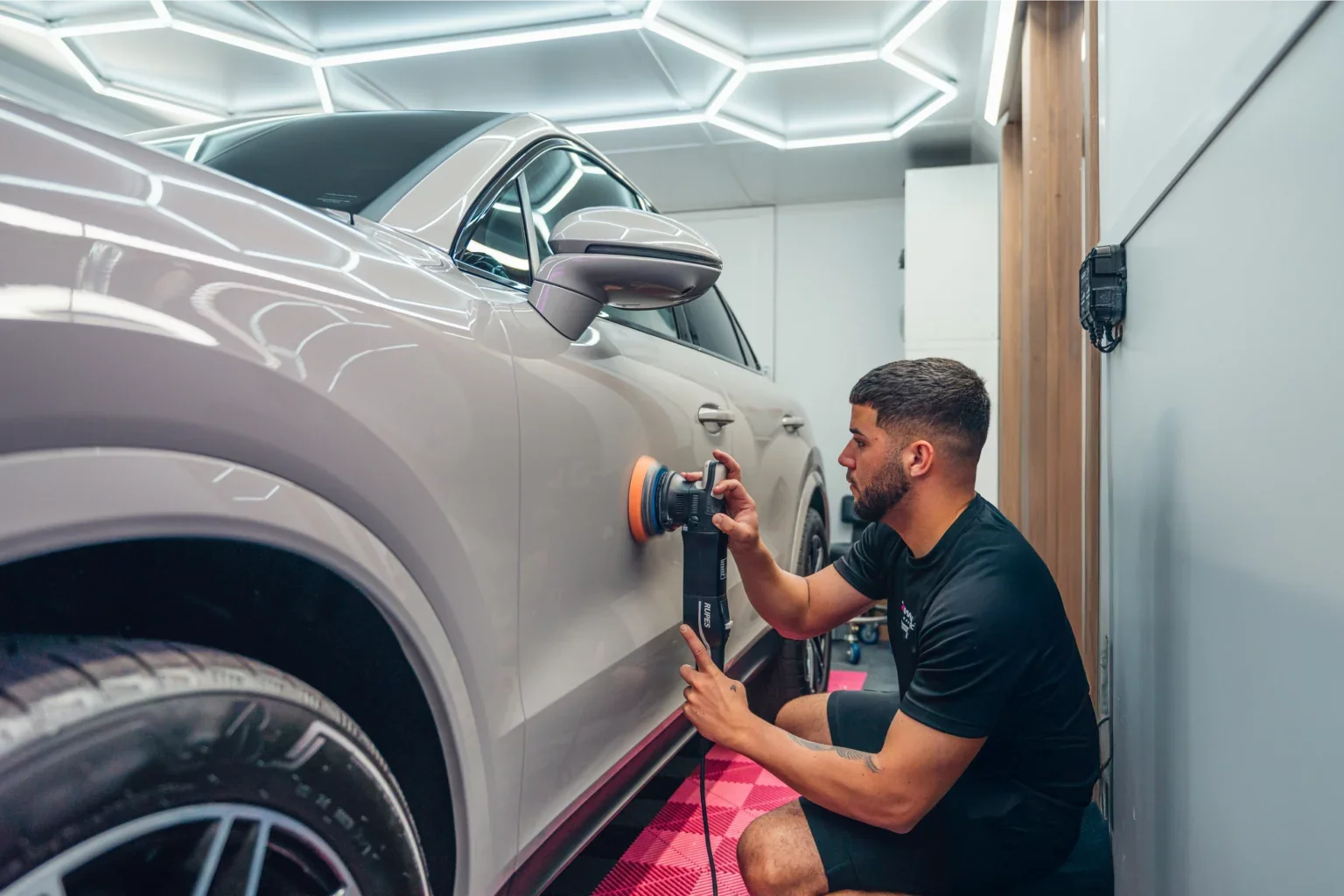
The photographs here show machine-polishing work from the shop archive. They establish the activity shown, not a measured removal percentage, a particular compound or a before-and-after result.
05
Settle correction before choosing protection
Treat correction and protection as separate lines in the conversation. First agree which paint defects will be addressed and what will remain. Then discuss System X ceramic coating or PPF for the finish you are keeping. If an area needs paint repair, resolve that plan before choosing the final protection scope.
For a daily driver, explain which marks actually bother you: swirls in direct light, one damaged panel, or an overall dull appearance. That helps frame a useful result. It does not require a whole-car correction simply because you are also considering a coating.
06
Arrange a paint-correction assessment in Naples
Unique Auto Lab offers multi-stage paint correction at its Horseshoe Drive shop. Send the vehicle year and model, the panels you want assessed and clear photographs of the marks. Include known repainting, existing protection and any products or polishing already tried. Ask the shop to confirm whether correction is suitable before committing to a package.
Have the proposal identify the panels included, preparation, expected finish, known remaining defects and any protection added afterward. Paint repair, if needed, should have its own confirmed scope and provider; this guide does not establish that repainting is available at the shop. Review the finished work under lighting that lets you see the concerns you agreed to address.
Related guides
Sources and further reading
Sources support the specific points cited in this guide. Your car's condition and the proposed work still need to be discussed with the shop.
3M scratch-removal instructions and limitations ↗Meguiar’s paint-care FAQ ↗3M paint-finishing process guidance ↗