
01
Can you ship car interior parts for reupholstery?
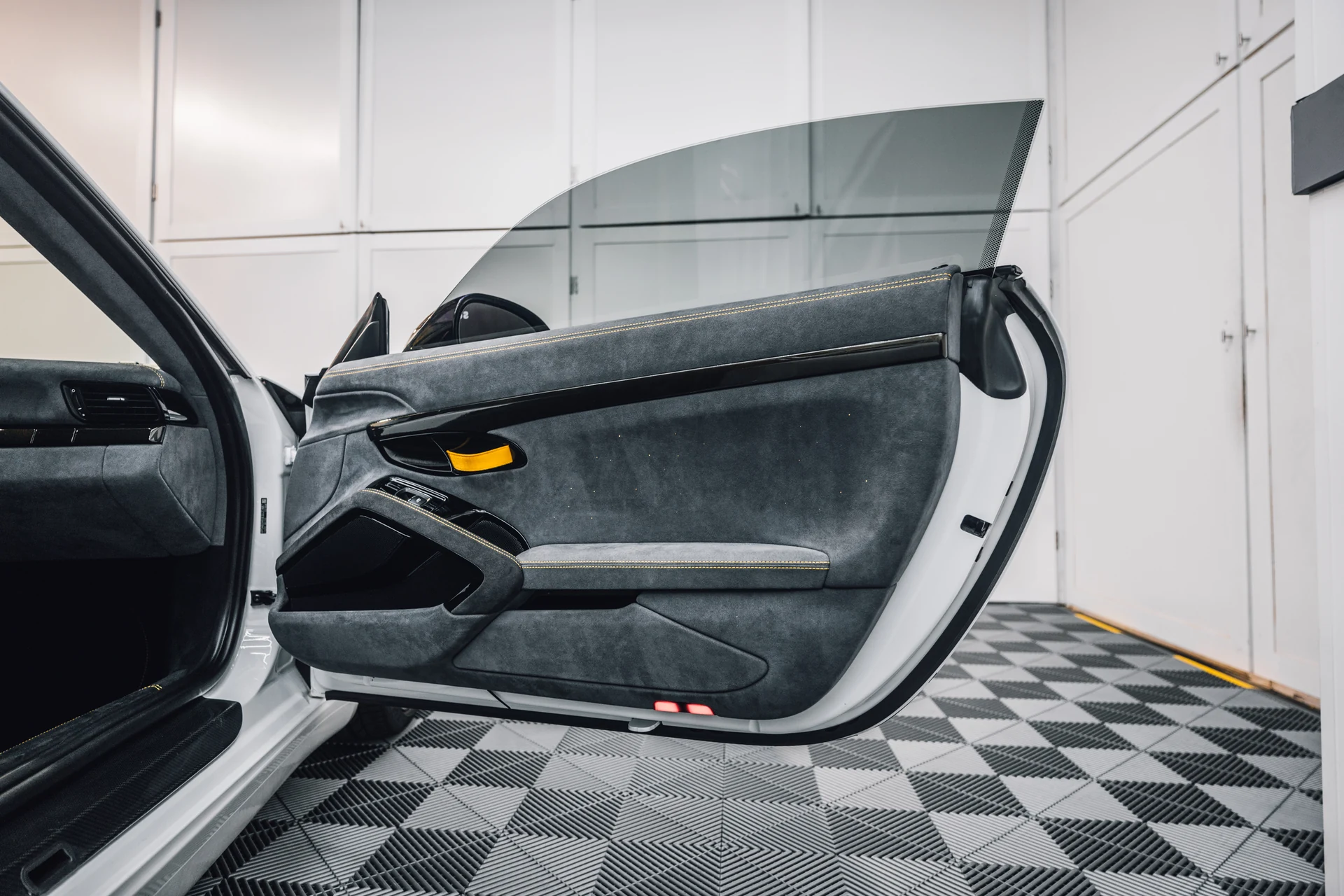
Yes. Unique Auto Lab offers ship-in work for door panels, dashboards and trim at its Naples shop. Before sending a part, agree what the shop will receive, the work requested, who will remove and reinstall it, and how it will travel back. A photograph starts that conversation; it is not shipping acceptance.
This can suit an owner who wants a particular trim piece retrimmed while keeping the car at home. It needs a different plan from dropping off the whole vehicle: the person preparing the parts, the carrier and the upholsterer may each see only one stage of the job.
02
Name the assembly, not just the material
A door panel can mean the complete assembly or a smaller upholstered insert. A dashboard can arrive with vents, instruments and wiring still attached. Write down exactly which pieces you propose to send and photograph both the visible face and the reverse.
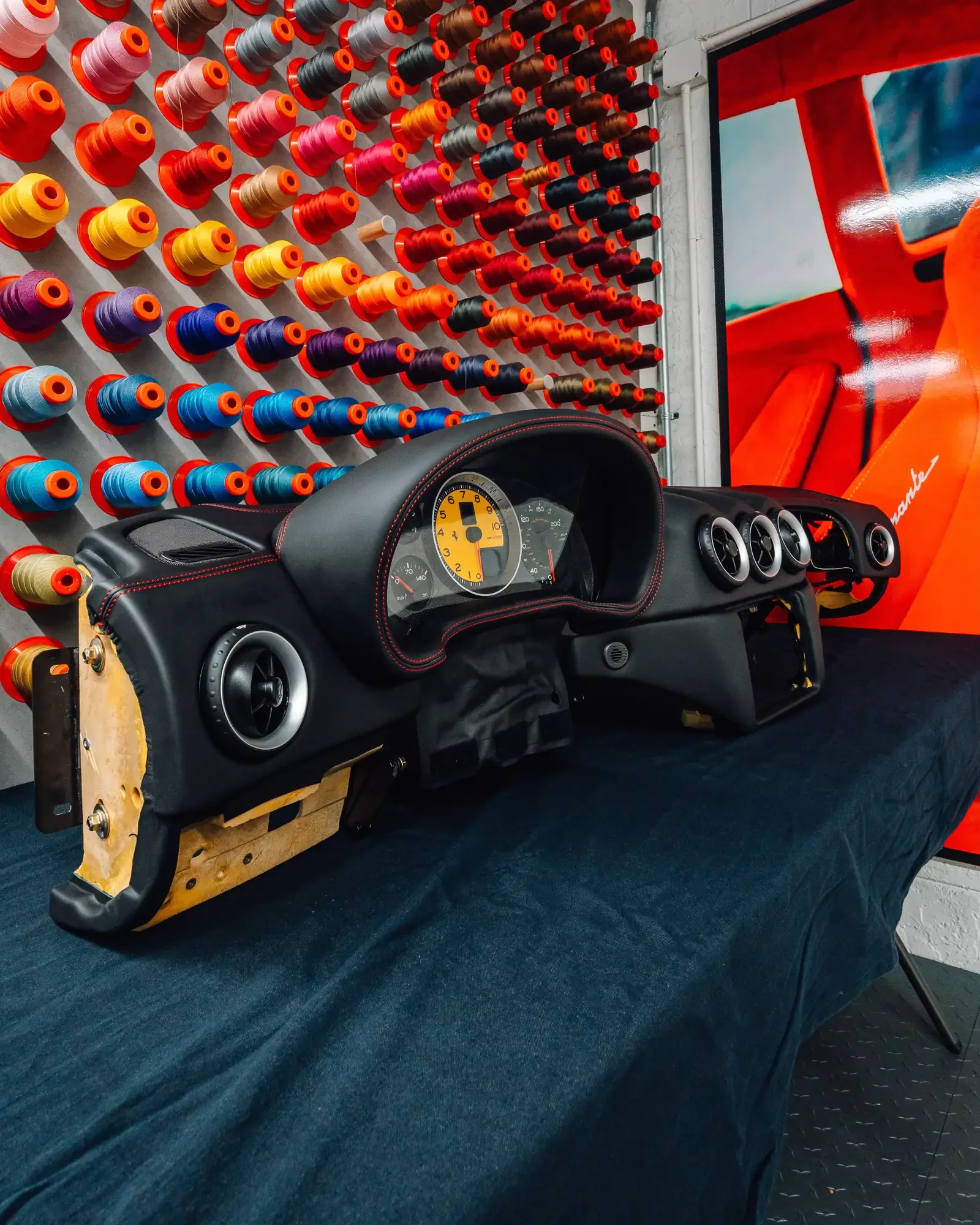
The dashboard pictured on the bench still has instruments and vents. Use that as a prompt to list attachments, not as a model for how to pack a parcel.
Ask which attachments should remain and which should be handled separately by the person removing the trim. Arrange removal and refitting with someone qualified for that vehicle. Do not dismantle an airbag-equipped assembly using a general upholstery guide.
03
Make a record before packing
Give each accepted piece a simple identifier, such as “left door insert” or “center console lid.” Use the same names in the proposal, photo filenames and packing list. That makes a missing part or an unexpected condition easier to discuss.
Photograph the face, reverse, edges, mounting points and any existing damage. For a pair of panels, keep left and right identified even if they look similar. Include close views of loose covering, cracked backing or missing clips so the requested work is clear before the box arrives.
| Item | Record before sending | Agree with the shop |
|---|---|---|
| Parts | Vehicle year/model; named pieces; face and reverse photos. | Which exact components are accepted. |
| Requested finish | Material reference, color sample and the trim that will stay in the car. | The approved covering and scope, including excluded work. |
| Removal and fitting | Who is handling the vehicle and detached assemblies. | Which attachments travel and who checks the refitted parts. |
| Transport | Packed dimensions, weight and any unusual component or fragile edge. | Suitable carrier service and packing assistance. |
| Return | Recipient contact and destination; packaging available. | Who arranges the return and what must be settled before dispatch. |
04
Choose packaging around the part’s shape
FedEx recommends cushioning and a sturdy container for automotive parts that can be scratched or dented, with protection at vulnerable edges and fittings. UPS advises wrapping items separately, using suitable cushioning and limiting movement inside the package. Those principles matter for a trim panel with a large finished face and small projecting mounts.
Do not assume a thin panel is an easy parcel simply because it is light. UPS specifically cautions against loose-fill peanuts for flat or narrow items that can migrate to the edge of a box. Ask the carrier or a packaging specialist to assess the actual part, especially a long dashboard or irreplaceable original panel.
Show the packer the back as well as the face. Point out delicate mounting tabs, vents and projecting hardware. Have the proposed padding support the part without treating a fragile projection as a load-bearing point. Confirm the packing approach for the finished surface before the return journey, too.
05
An airbag-containing assembly is a different shipment
FedEx lists airbags among automotive dangerous goods. Do not send an assembly containing an airbag as an ordinary trim parcel or assume that removing it from the vehicle removes the shipping issue. Identify the component to both the shop and carrier before arranging transport.
The carrier’s dangerous-goods team and a qualified vehicle professional need to determine the appropriate handling. This guide does not provide removal, disarming, classification or dangerous-goods packing instructions.
06
Agree the return before the outward trip
Confirm the current receiving address and contact directly with the shop. Share the tracking details and a copy of the parts list, and keep your condition and packing photographs. Do not dispatch a parcel based solely on a website address.
Ask whether the outward packaging can be used for the return, whether new packing is needed, and who will arrange collection and payment. Check the carrier’s applicable value and claims terms for your particular shipment; a tracking number alone does not settle those questions.
Separate project timing from transit time. A delivery estimate from the carrier is not a completion date for upholstery work. Agree how material choices, any newly discovered condition and the return arrangements will be confirmed.
07
Start your ship-in upholstery project
Send Unique Auto Lab the vehicle year and model, the named parts, photographs and the finish you want. Mention where the parts will be coming from and who will handle removal and refitting. The next useful step is agreement on the exact shipment, not buying a box first.
For a wider interior project, use the upholstery quote guide to settle the work and read the leather and Alcantara comparison if the covering is still undecided. Keep those choices in the same written project record as the shipping plan.
Related guides
Sources and further reading
Sources support the specific points cited in this guide. Your car's condition and the proposed work still need to be discussed with the shop.
FedEx: shipping automotive parts ↗UPS: packaging guidelines ↗