
01
Should the stitching blend in or stand out?
Choose tonal stitching if you want the material and panel shape to lead. Choose contrast stitching if you want the seam itself to become a visible line. Before approving either, compare actual thread with the trim material and decide which seams will carry that treatment.
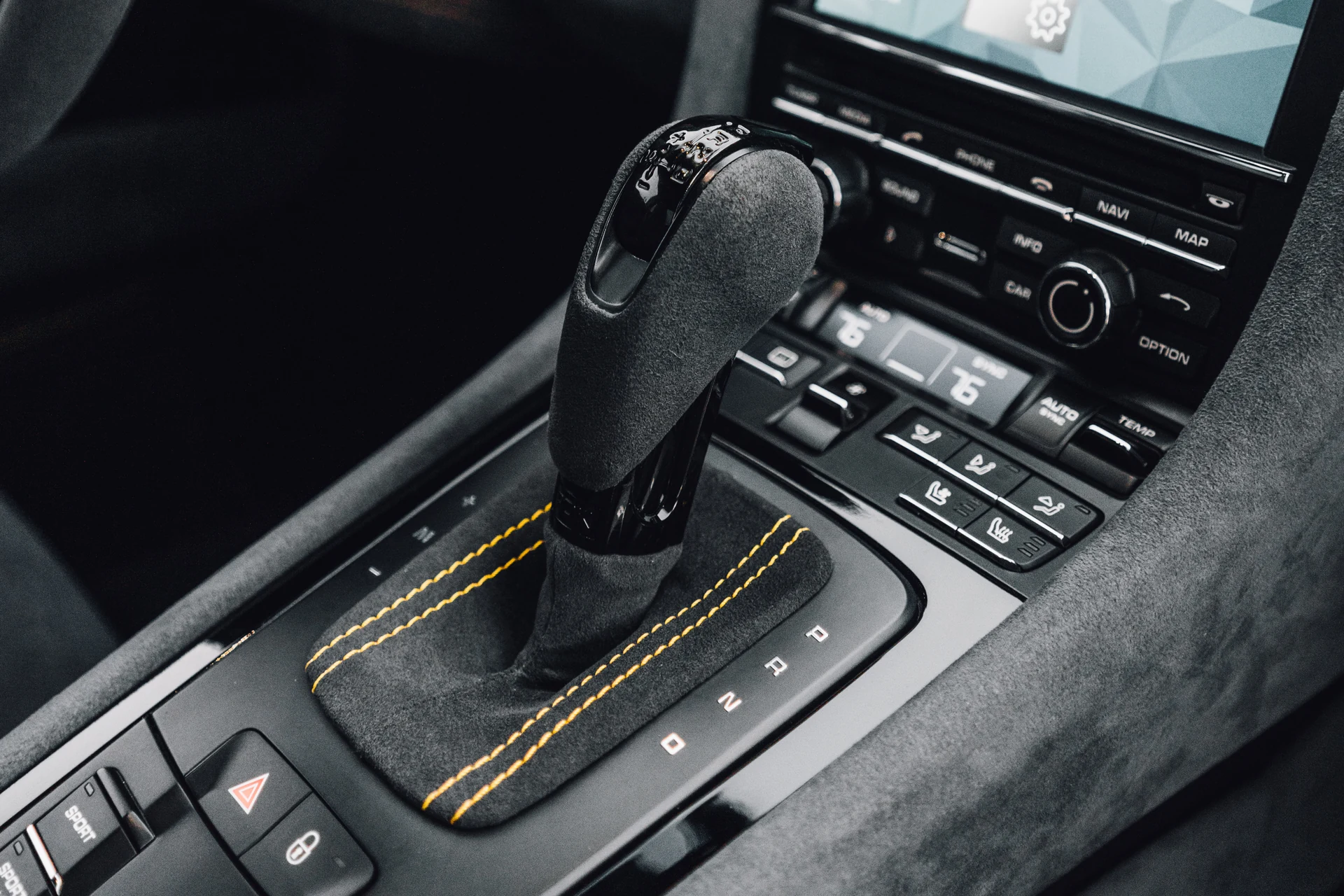
The Porsche gear-selector photograph shows why placement matters. Two yellow rows trace a small panel surrounded by dark trim. You notice the outline without needing every surface in the cabin to use the same accent. Start by naming the part you want to emphasize: a seat edge, door insert, armrest or shift boot.
02
Pick the panel before picking the color
A single accent on the console and a repeating accent across seats and doors are different designs. Mark the proposed seams on wide photographs of your interior. Include the parts that will stay original; those edges become the meeting points between old and new work.
Porsche used coordinated contrasting seams across its two-tone 911 interior concept in 2020, including cross stitching on the steering wheel. It is a useful historical example of a cabin-wide plan. Your own retrim can be much smaller: choose the repeated lines deliberately, then leave the remaining areas quiet.
03
Compare thread and trim together
Lay the thread choices against the actual leather or Alcantara sample. Then put that combination beside a part of the interior you intend to keep. A thread that looks right on its own may draw too much attention against a dark panel or disappear against a lighter one.
Use phone photographs to discuss placement, then make the color decision with physical samples. Check the combination in daylight and in the cabin before approving it. If matching an existing seam is the priority, identify that seam as the reference and ask which available sample comes closest. A color name alone leaves too much room for interpretation.
| Direction | What to compare | What to write down |
|---|---|---|
| Tonal | Thread close to the covering, beside the trim that stays. | The chosen material and thread sample; which seams remain visible. |
| One contrast accent | A proposed line on the console, wheel covering or seat against the rest of the cabin. | Exactly where the accent starts and stops. |
| Repeated contrast | The same treatment on seats, doors and console, viewed together. | Every included panel and any original parts excluded from the retrim. |
04
Look at the seam, not only the thread color
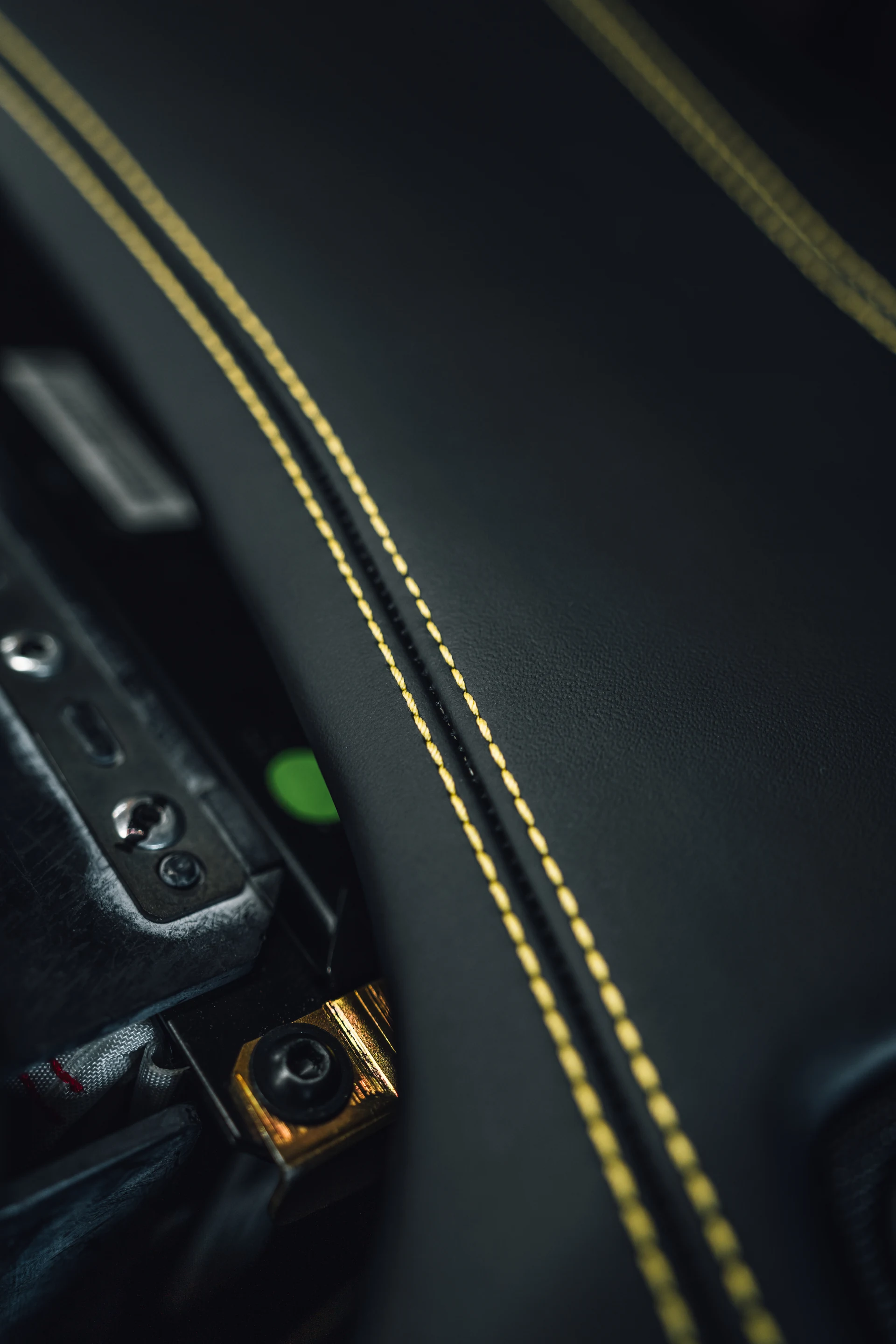
In the close photograph, two yellow rows sit on either side of a dark center line. The spacing and path of the rows are part of the appearance. A matching yellow thread used in a different layout would give a different result.
AMANN’s automotive guidance notes that contrast makes each stitch visible. When reviewing a sample, look along the line and around its curves as well as straight down at the color. Ask whether the example represents the intended covering and seam layout. A loose thread swatch settles color; it cannot show how the finished seam will sit.
05
Can you change just the stitching?
Treat that as a question about the existing trim construction. Ask the upholsterer to distinguish the visible decorative rows from the seams holding the covering together, and to explain what access or retrimming the proposed change needs. Do not assume a thread-color change can be completed with every panel still installed.
Thread choice also has to suit its position in the car. AMANN identifies different heat and light performance across automotive thread types. For a sun-exposed dashboard or convertible interior in Naples, discuss the thread’s intended use as well as its shade. A bright color is not evidence of fade resistance.
Airbag deployment seams require vehicle-specific methods. AMANN distinguishes them from decorative seams and describes OEM-defined sewing parameters. Leave those areas to an appropriate assessment; do not copy decorative stitching across an airbag cover or deployment path.
06
What to approve before the retrim
Keep a short design record alongside the upholstery proposal. It gives both sides something more specific than “yellow stitching like the picture.” The record should identify the visual choices; the shop still determines how they can be made for the particular parts.
- Vehicle year and model, plus wide views of the cabin and close views of the existing seams.
- The actual material and thread sample references selected.
- A marked photograph showing the seam path, repeated accents and stopping points.
- The panels being retrimmed and the original trim staying in place.
- The sample or reference used to agree the finished appearance, with any limitations written down.
07
Custom car upholstery in Naples
Unique Auto Lab works with leather and Alcantara interiors in Naples, including custom stitching and work that follows original stitch patterns. Send the vehicle details and the parts you want to change. Photos of the whole cabin and your preferred stitching help start a specific discussion.
If you are still choosing the covering, read the leather and Alcantara comparison first. For a restoration, decide whether the aim is the documented original stitch pattern or a personal change before choosing the contrast color.
Related guides
Sources and further reading
Sources support the specific points cited in this guide. Your car's condition and the proposed work still need to be discussed with the shop.
AMANN: decorative, functional and airbag seams ↗Porsche: a coordinated two-tone interior, April 2020 ↗