
01
Plan the embroidery before the retrim
A name, model designation or small motif can become the focal point of a custom car interior. Start with the part it belongs on, the size of the finished design and the material underneath it. Approving a logo on a screen leaves those decisions unresolved.
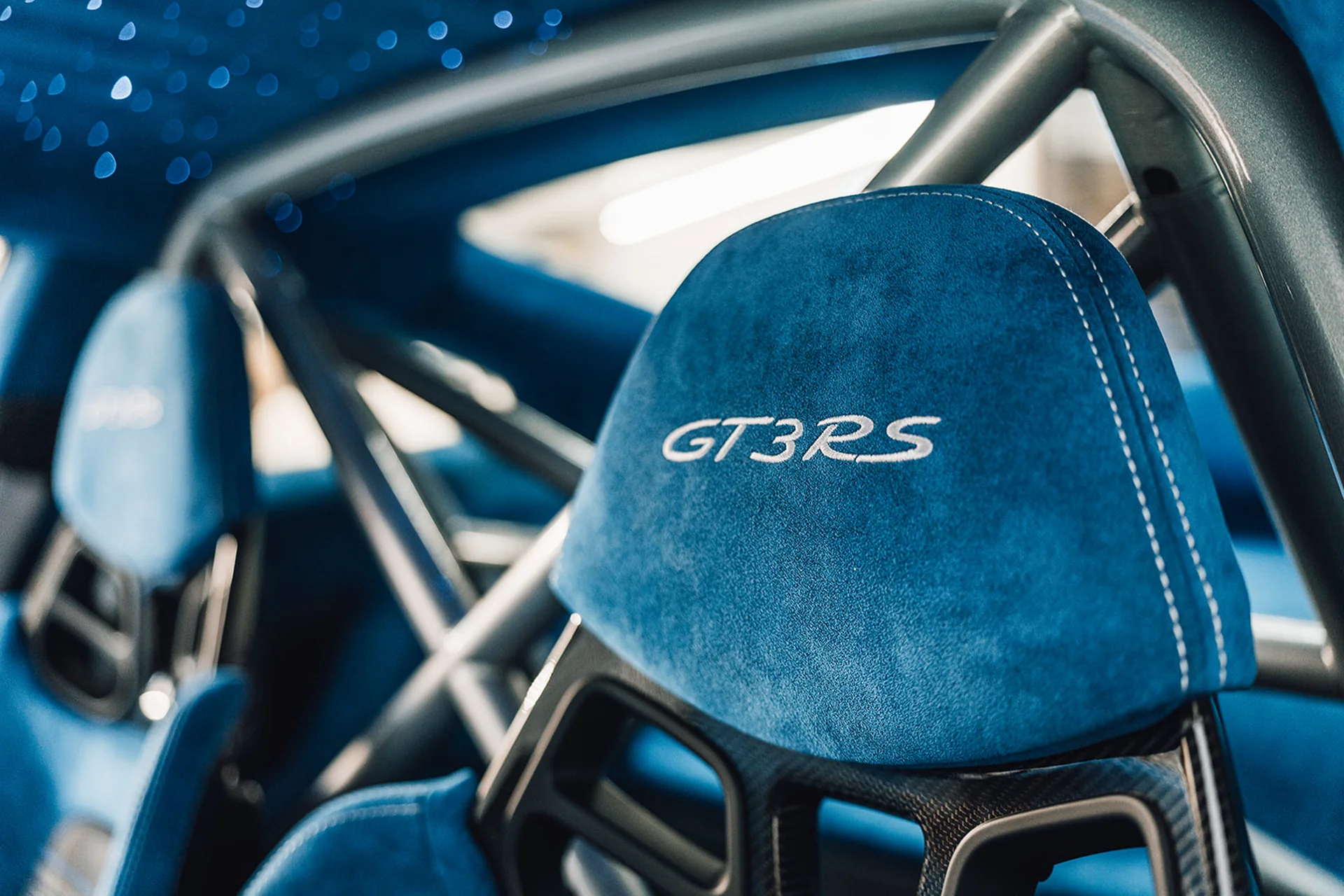
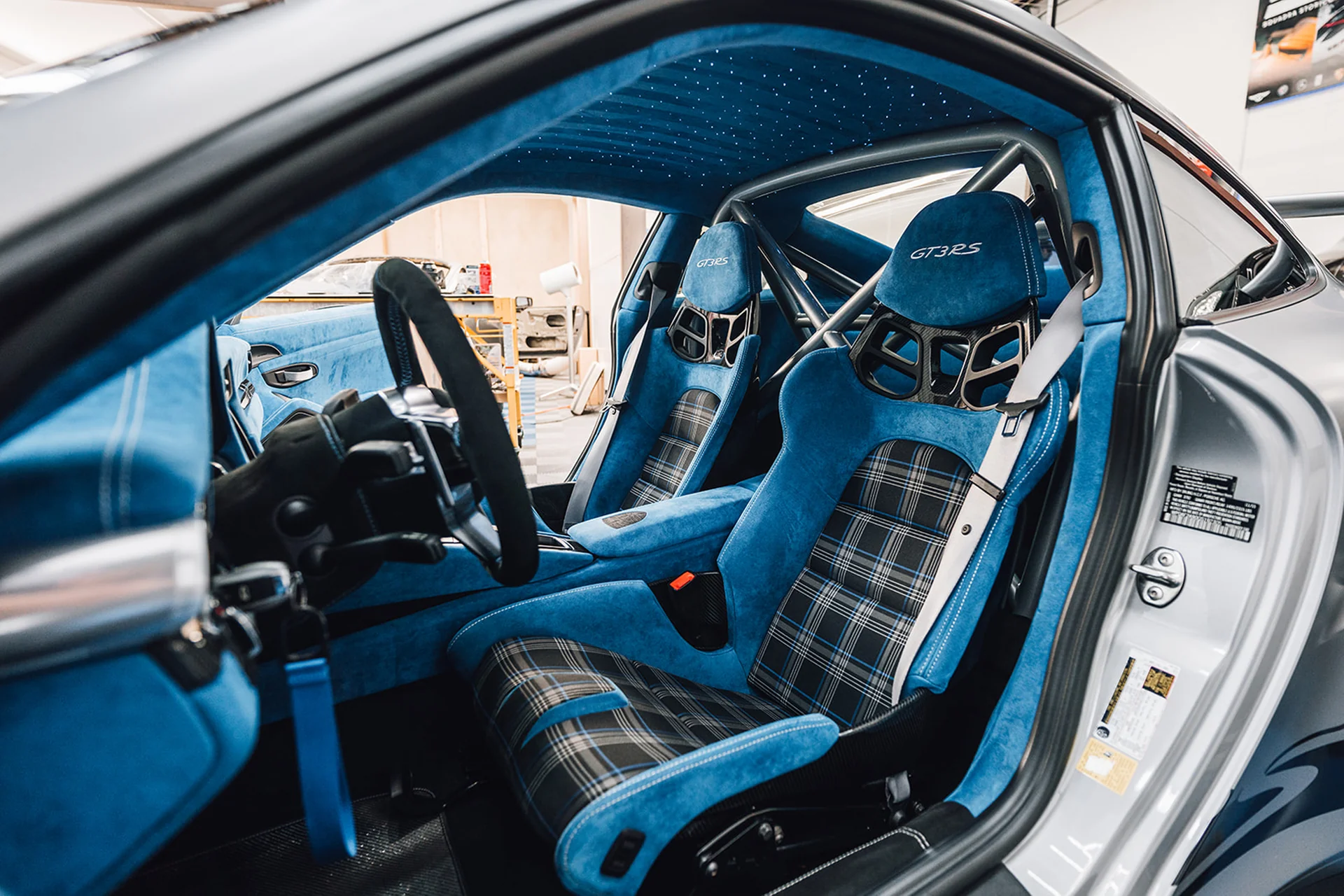
The shop photographs show light lettering on blue headrests, first close up and then in the full cabin. Use the detail to judge the letter shapes and the wider view to judge their scale against the seats. The photographs document the finish, not the thread specification or assembly process.
02
Decide what should stand out
On these headrests, pale thread makes the short inscription easy to pick out against the blue material. The wider photograph shows it repeated across both seats, above patterned center panels. The artwork occupies a small area of each seat, but its contrast makes it noticeable from outside the door.
For your own interior, compare a tonal and a contrasting version on the chosen upholstery sample. Look from the open door and from the driver’s normal position, not only in a close-up. A design that reads well in a photograph may be too prominent for the cabin you want.
| Treatment | What to compare | Approval detail |
|---|---|---|
| Contrasting lettering | How quickly it draws your eye against the upholstery | Actual thread beside the material sample |
| Tonal lettering | Whether the inscription remains readable in the intended position | A stitched sample, viewed from more than one angle |
| Repeated motif on two seats | Matching position and apparent size on both covers | A placement reference for each seat |
| Long wording on a console | Available panel width and the direction it reads | Finished width and distance from surrounding seams |
03
Why a smaller logo may need different artwork
Embroidery turns shapes into stitches. Fine gaps, narrow strokes and small letters have physical limits that a printed image does not. Embroidery software guidance gives fonts recommended size ranges because shrinking or enlarging them can change stitch quality. There is no single minimum letter height that works for every design and material.
Bring the clearest original artwork you have and state the intended finished width. If a detailed crest loses definition at that size, compare a simplified version or a larger placement before approving it. Keep the exact spelling and orientation on the proof. A large screen preview should not be the only version you review.
04
Approve the material and the stitch-out together
A stitch-out is a physical stitched sample. It lets you inspect edges, spacing and the feel of the thread on the proposed surface. Embroidery settings depend on the material: stitch density, supporting stitches and compensation for movement all affect the result. A sample on an unrelated fabric cannot answer every question about the finished upholstery.
Alcantara lists embroidery among its customization techniques. That establishes an option to discuss, not that every artwork, part or existing cover is suitable. Ask whether a sample on the proposed material can be included in the job, and agree what the sample approval covers before production.
05
Confirm which part of the job changes
Specify whether the proposal covers a new upholstered panel, replacement cover or work on an existing cover. Do not assume a finished headrest or console can simply be stitched in place. Have the shop confirm access, placement and any restrictions for that particular component before settling on the design.
A useful approval sheet records the component, artwork version, finished width, thread choice and placement reference. For paired seats, record both positions. Keep any requested seam changes separate from the embroidery so the quote makes clear which work is included.
06
Discuss your custom interior in Naples
Send Unique Auto Lab a photograph of the part, your artwork and the approximate finished size you have in mind. Include the vehicle’s year, make and model and whether you are planning a wider retrim. The shop can review the idea alongside the material and component, rather than quoting from a logo alone.
Related guides
Sources and further reading
Sources support the specific points cited in this guide. Your car's condition and the proposed work still need to be discussed with the shop.
Embroidery lettering and size ↗Fabric-specific stitch settings ↗Alcantara customization ↗